
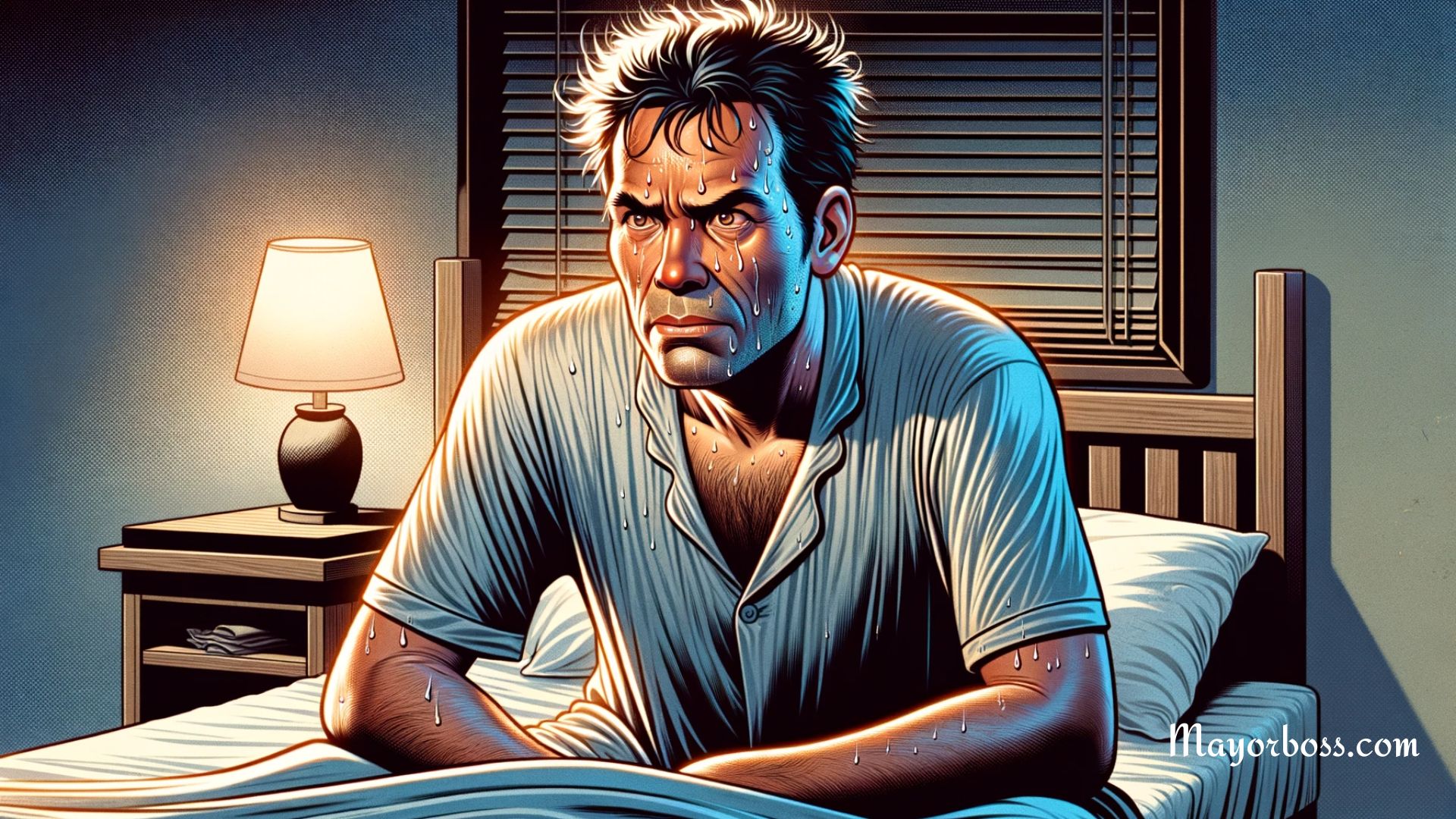
Night sweats in men, characterized by excessive sweating during sleep, can be both uncomfortable and concerning. You might wake up in the middle of the night, sheets drenched, despite a comfortable room temperature. While women often attribute night sweats to menopause, the causes in men can be more elusive. Understanding the potential triggers can help you address this night-time nuisance effectively.
Common Causes of Night Sweats in Men
- Anxiety or Stress: Persistent worry, fear, and tension before bed can increase your body’s temperature and sweat production, hence leading to sweats during the night.
- Hyperhidrosis: This condition causes excessive sweating, even during sleep.
- Alcohol and Substance Use: Regular consumption of alcohol or drug use can lead to night sweating.
- Diet: Spicy foods and caffeine, especially when consumed later in the day, can trigger sweating during sleep.
- Sleep Apnea: This sleep illness, characterized by pauses in breathing, often leads to night sweating.
- Low Testosterone: A decrease in testosterone levels, common in older men, can lead to night sweats.
- Hyperthyroidism: An overactive thyroid gland can disrupt your body’s heat regulation, causing excessive sweating.
- Tuberculosis: This serious infection is a well-known cause of night sweats.
- HIV/AIDS: Night sweats can be an early symptom of HIV infection.
- Prescription Drugs: Certain medications, including antidepressants, diabetes medications, steroids, and hormone therapies, list night sweats as a side effect.
- Over-the-Counter Medications: Some common drugs, like aspirin or acetaminophen, can cause sweating when taken in large doses.
- Cancer: Night sweats can be an early manifestation of some cancers, particularly lymphoma.
- Gastroesophageal Reflux Disease (GERD): Acid reflux can cause discomfort and night sweats.
Identifying the Cause
To pinpoint the cause of your night sweats, consider these questions:
- Are you experiencing other symptoms? Fever, weight loss, or local pain might indicate a specific condition.
- Have you started new medications? Check if night sweats are a known side effect.
- Have there been changes in your lifestyle? Consider recent changes in diet, exercise, or stress levels.
When to See a Doctor
It’s important to consult a healthcare professional if:
- Night sweats are frequent and severe.
- You’re experiencing additional symptoms like unexplained weight loss or fever.
- The night sweats are affecting your quality of life and sleep.
Managing Night Sweats
While addressing the underlying cause is crucial, here are some tips to manage night sweats:
- Maintain a Cool Environment: Keep your bedroom cool and use breathable bedding.
- Wear Light Clothing: Opt for lightweight, moisture-wicking sleepwear.
- Stay Hydrated: Drink plenty of water throughout the day.
- Avoid Triggers: Limit alcohol, caffeine, and spicy foods, especially before bedtime.