
Finding a lump under your arm can be worrying. You may notice it while showering, applying deodorant, or getting dressed. It may feel tender when you touch it, or you may have no pain at all.
In many cases, an armpit lump is a swollen lymph node caused by your immune system responding to an infection. Less often, persistent swelling can be linked to another health condition that needs medical attention.
Here is what you should know.
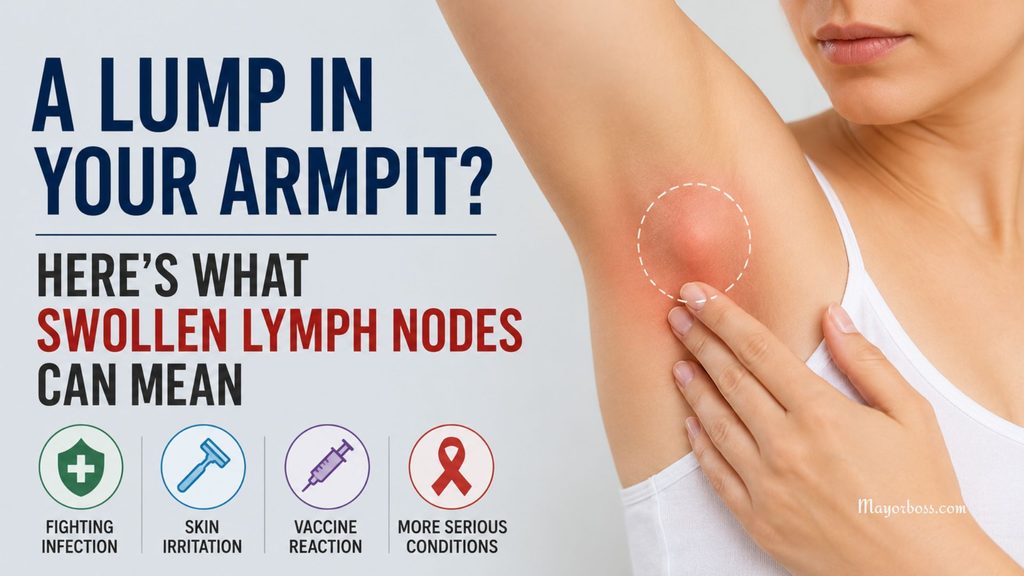
What Are Lymph Nodes?
Lymph nodes are small glands found throughout your body, including your neck, groin, and armpits.
They are part of your immune system. They help filter fluid and trap germs before those germs can spread through your body.
When your immune system is fighting something, nearby lymph nodes may grow larger. They may also become sore or tender. Infections are the most typical cause of swollen lymph nodes.1
An Infection May Be the Cause
A swollen lymph node in your armpit often means your body is responding to an infection somewhere nearby.
A cut, infected hair follicle, boil, or skin infection on your hand, arm, chest, or underarm can cause nearby lymph nodes to swell.
Some viral illnesses can also cause swollen glands in several areas of the body.
When an infection is responsible, the lump may feel tender and may improve as the infection clears.
A Shaving Irritation or Skin Problem Can Trigger Swelling
The lump you feel may not always be the lymph node itself.
Shaving can irritate the skin and lead to ingrown hairs or inflamed hair follicles. Blocked glands, boils, and skin cysts can also create painful lumps in the armpit.
Look for redness, warmth, tenderness, drainage, or a visible bump on the skin.
Avoid squeezing an armpit lump. This can worsen irritation or spread an infection.
A Recent Vaccination Can Sometimes Cause It
Lymph nodes may temporarily swell when your immune system reacts to a vaccine.
This can happen in the armpit on the same side where you received the injection. The swelling often goes away with time.
If the lump continues growing or does not improve, tell your doctor about both the swelling and any recent vaccinations.
Could an Armpit Lump Be Cancer?
Most swollen lymph nodes are not caused by cancer. Infections are far more common.
Still, some cancers can cause enlarged lymph nodes.
Lymphoma, which begins in the lymph system, may cause painless swelling in the armpit, neck, or groin. Other possible symptoms include unexplained weight loss, fever, tiredness, and heavy night sweats.
Breast cancer can also spread to lymph nodes in the armpit. For this reason, an unexplained armpit lump may need further testing, especially if you also notice a breast lump, nipple changes, skin dimpling, or another change in your breast.2
Having an armpit lump does not mean you have cancer. It means the cause should be checked if the swelling does not settle.
What Does a Concerning Lymph Node Feel Like?
The way a lump feels can offer clues, but you cannot reliably diagnose the cause by touching it.
Lymph nodes caused by infection are often tender and may move slightly under your fingers.
A lump that feels hard, continues getting larger, or does not move easily deserves medical evaluation. Mayo Clinic also advises seeing a healthcare professional when swollen nodes last for about two to four weeks or occur with unexplained fever, night sweats, or weight loss.3
How Are Swollen Armpit Lymph Nodes Checked?
Your doctor may ask when you first noticed the lump and whether you recently had an illness, skin infection, injury, vaccination, or other symptoms.
The doctor will examine the lump and may check other lymph nodes.
Depending on what they find, testing may include blood work, an ultrasound, breast imaging, or another scan. In some cases, a small sample of the lymph node may be tested.
When Should You See a Doctor?
Arrange a medical evaluation if an armpit lump has no clear cause, continues to grow, feels hard or fixed, or does not improve.
You should also get checked if you have fever, heavy night sweats, unexplained weight loss, breast changes, or several swollen lymph nodes.
Most armpit lumps turn out to have a treatable or temporary cause. Still, a new lump that stays around should be examined rather than ignored.
References:
- https://www.nhs.uk/symptoms/swollen-glands/ ↩︎
- https://www.cancer.org/cancer/types/breast-cancer/screening-tests-and-early-detection/breast-cancer-signs-and-symptoms.html ↩︎
- https://www.mayoclinic.org/diseases-conditions/swollen-lymph-nodes/symptoms-causes/syc-20353902 ↩︎
Was this helpful?
Your feedback helps us improve our articles.