
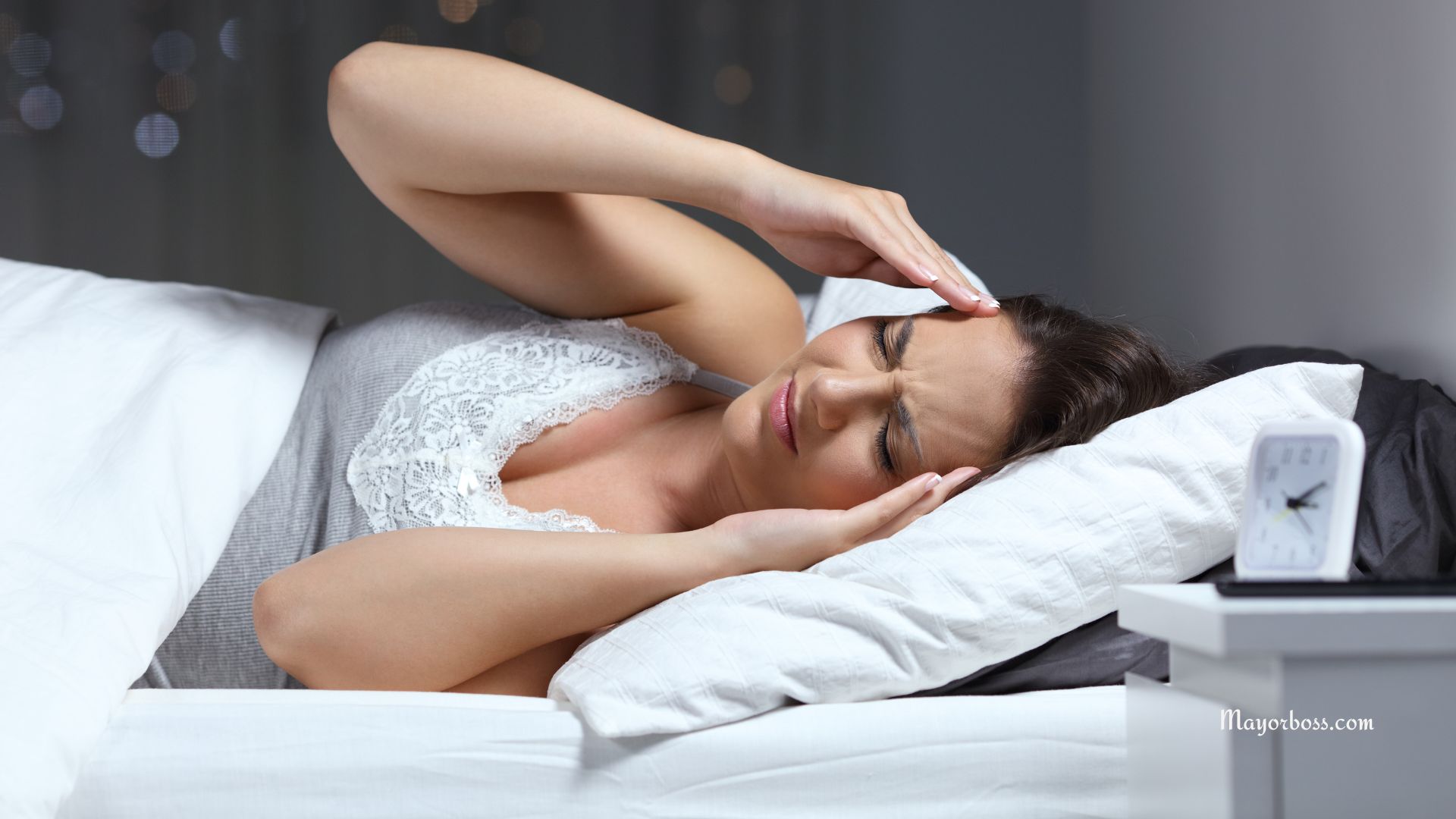
If your head hurts when you wake up, pay attention to what else you feel. A sore jaw, a stiff neck, or tiredness after a full night in bed can help your doctor work out what is happening.
Your bedtime habits may also play a part. Look for a pattern that fits your headaches, without assuming every uncomfortable morning has the same cause. If the pain keeps returning, arrange a medical appointment.
1. Keeping Irregular Bedtimes
A regular wake-up time is a useful place to start, including on weekends. Give yourself a regular bedtime, too.
Midnight on Monday, ten o’clock on Tuesday, then a long sleep on Saturday: your body has to keep adjusting. Changes in your sleep routine can contribute to migraine attacks. Poor sleep is linked with more frequent headaches.
2. Staying on Your Phone Until You Fall Asleep
It’s easy to lose sleep when you keep reading messages under the covers. Bright screen light can also keep your brain alert when you want to rest.
Try putting your phone on charge away from the bed. NIH sleep advice recommends quiet time during the hour before bed, with less exposure to bright screens.
3. Keeping a Pillow That Leaves Your Neck Sore
Your favorite pillow may feel soft and still leave your neck at an awkward angle. Check whether it pushes your chin forward or lets your head tilt sideways.
Adjust the support so your head rests in line with your body. The NHS suggests trying a low, firm pillow when neck pain accompanies headaches. Persistent pain needs an assessment beyond changing pillows.
4. Spraying Fragrance Around Your Bed
A scented pillowcase is less pleasant when smells bring on head pain. Room sprays, candles, and laundry products may all contribute. Strong odors can trigger or worsen migraine attacks in some people. If headaches seem to follow a particular product, leave it out of the bedroom and watch for a repeated change in your symptoms.
5. Taking Tea or Coffee to Bed
Black tea contains caffeine, even if you drink it to relax. Caffeine’s effects can last up to eight hours, so a drink after dinner may interfere with your sleep. The NIH advises avoiding caffeine close to bedtime.
Have it earlier in the day. If you decide to drink less overall, reduce it gradually; stopping suddenly can cause headaches in people who regularly consume caffeine.
6. Relying on Alcohol to Get Sleepy
The trouble with using alcohol to fall asleep is what happens later. You may drift off sooner, then wake more often through the night. Drinking can also leave you with a headache the following morning.
Try a different evening routine, such as a warm shower, and note how you feel on waking.
7. Clenching or Grinding Your Teeth
A headache that comes with jaw soreness deserves a dental check. Grinding can happen during sleep without your knowledge. Frequent or severe grinding can cause headaches and damage teeth.
Mention any tooth sensitivity or grinding sounds your partner has heard. A dentist can check for wear and discuss treatment, including whether a guard would help protect your teeth.
Frequently Asked Questions
1. Why does my head hurt after eight hours of sleep?
Time in bed doesn’t tell you how well you slept. Loud snoring, gasping, and daytime tiredness are reasons to ask about sleep apnea, which repeatedly interrupts breathing during sleep and can cause morning headaches.
2. Could I just need more water?
Possibly. Not drinking enough fluids can cause headaches. Drink regularly throughout the day. Water will not resolve every headache, so do not dismiss pain that keeps returning.
3. Should I take a painkiller before bed?
If you mean every night to prevent headaches, speak with your doctor first. Taking painkillers too often can itself cause headaches.
4. What should I write in a headache diary?
Note when pain starts, how long it lasts, and any other symptoms. Add sleep times, evening drinks, and medicines. A headache diary can help you and your doctor assess possible triggers.
5. When should I get urgent help?
Seek emergency care for a sudden, severe headache, or pain with weakness, confusion, vision loss, or fever and a stiff neck.
Headaches that worsen indoors and ease outside, especially when others at home feel ill, could involve carbon monoxide exposure. Get everyone outside, seek urgent help, and stay out until the building is safe.
Was this helpful?
Your feedback helps us improve our articles.