
Itchy eyes after a shower often mean your eyes or eyelids are reacting to hot water, steam, soap, shampoo, face wash, chlorine in water, or mold in the bathroom. Most cases are mild and improve with cooler showers, gentle products, and avoiding rubbing. See an eye doctor if itching comes with pain, vision changes, thick discharge, strong redness, or swelling.
Why Your Eyes May Itch After A Shower
You get out of the shower expecting to feel clean and refreshed.
Then your eyes start to itch.
Maybe they burn a little. Or maybe they turn red. Maybe the skin around your eyelids feels tight. It can feel strange, especially when it happens often.
In most cases, itchy eyes after a shower are not a sign of a serious illness. They often mean something in your shower routine is irritating the surface of your eyes or the thin skin around your eyelids.
Still, your eyes deserve attention. The eye surface stays comfortable when your tears form a smooth, healthy layer. Dry eye happens when your eyes do not make enough tears or when the tears do not work well, and this can lead to burning, scratchy feeling, redness, blurry vision, and light sensitivity.1
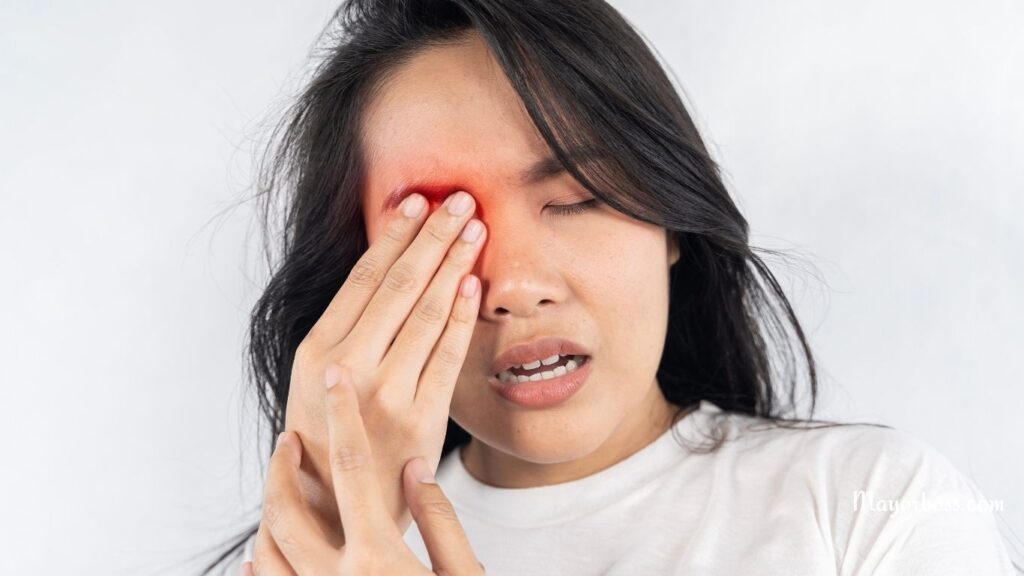
Hot Water Can Dry The Eyes And Eyelids
Hot showers feel soothing, but your eyes may not like them.
Heat and steam can leave your eyes feeling dry. They can also affect the delicate eyelid skin. The eyelid skin is thinner than skin on most other parts of the body, so it reacts faster to heat, soaps, air, and water changes. Cleveland Clinic notes that dry eyelids can become itchy, flaky, red, or rough, and hot water can be harsh on that area.2
This is why your eyes may feel fine before the shower, then itchy afterward.
If you take long, hot showers, the problem may happen more often. Mayo Clinic also recommends avoiding long, hot showers and baths when treating dry skin.3
Soap, Shampoo, And Face Wash Can Irritate Your Eyes
Even when you rinse well, small traces of shampoo, conditioner, body wash, shaving cream, or face cleanser can reach your eyes.
You may not feel it right away. But once you step out and dry your face, your eyes may start to itch or sting.
Fragrances, preservatives, and strong cleansing ingredients are common reasons. Contact dermatitis is an itchy rash that happens after direct contact with a substance or an allergic reaction to it. Mayo Clinic lists cosmetics, fragrances, and other products as common triggers.4
This can affect the eyelids more than the rest of the face because eyelid skin is so sensitive.
Think about any new product you started using. A new shampoo, face wash, hair dye, eye cream, makeup remover, or scented soap may explain the change.
Chlorine Or Minerals In Water May Irritate Sensitive Eyes
Tap water often contains disinfectants that help control germs. For most people, this is not a problem. But some people have sensitive eyes and notice itching, burning, or redness after water gets near the eyes.
The Environmental Protection Agency lists chloramines in drinking water and notes that exposure above regulated limits may cause eye and nose irritation.5
Hard water may also leave your skin feeling dry or tight. While hard water itself does not usually harm the eyes, it can make soap harder to rinse off. That leftover film may bother your eyelids or eye surface.
If your symptoms started after moving to a new home, changing water systems, or installing a new shower setup, water quality may be part of the picture.
Bathroom Mold Can Trigger Itchy Eyes
Bathrooms hold moisture. That makes them a common place for mold, especially around tiles, shower curtains, windows, drains, and ceiling corners.
For people who are sensitive to mold, exposure can cause red or itchy eyes, stuffy nose, wheezing, cough, sore throat, burning eyes, or skin rash. The CDC says mold can irritate the eyes, nose, throat, skin, or lungs even in people without a mold allergy.
So, if your eyes itch after every shower and you also sneeze or feel congested in the bathroom, check for mold.
You may not always see it. A musty smell is another clue.
Eye Allergies Can Feel Worse After Showering
Eye allergies often cause itching, redness, tearing, and swelling. The American Academy of Ophthalmology explains that eye allergies happen when the eyes react to an allergen or irritant, leading to red, itchy, tearful, swollen eyes.6
A shower can stir up allergens in a few ways.
Steam may loosen dust or mold in the bathroom. Hair products may carry fragrance. Towels may hold detergent residue. Even your pillowcase or hair can carry pollen, and then water moves it toward your face.
Allergic eye itching often affects both eyes. It may come with sneezing, a runny nose, or itchy skin.
Dry Eye May Be The Real Reason
Some people think itchy eyes always mean allergies.
Not always.
Dry eye can feel itchy, scratchy, gritty, or burning. It can also cause redness and blurry vision. The National Eye Institute states that dry eye can happen when your tears dry too fast or do not keep the eyes wet enough.
A shower may expose an existing dry eye problem.
For example, your eyes may already be dry from screen use, contact lenses, low humidity, poor sleep, or certain medicines. Then hot water and steam push them over the edge.
If you often feel like sand is in your eyes or you blink a lot to clear your vision, dry eye may be the main issue.
Contact Lenses Can Make It Worse
If you wear contact lenses, your eyes may itch more after a shower.
Water should not get into your eyes while contacts are in place. Germs in water can attach to lenses and increase the risk of infection. Also, lenses can make dry eye symptoms stronger.
A safer habit is simple.
Remove your lenses before showering. Put them back in only after your hands and face are clean and dry.
If your eyes itch every time you wear contacts, talk with an eye care professional. You may need a different lens type, a new cleaning routine, or treatment for dry eye.
What You Can Do At Home
Start with small changes.
Take shorter showers with warm water, not hot water. Keep your face out of the direct water stream when rinsing shampoo. Close your eyes tightly when washing your hair.
Use gentle products without fragrance around your face and hairline. Avoid getting shampoo, conditioner, or cleanser near your eyelids.
Rinse well.
Use a clean towel each time. If detergent bothers your skin, switch to a gentle laundry product without fragrance.
You can also use preservative-free artificial tears after the shower if your eyes feel dry. The National Eye Institute lists over-the-counter artificial tears as a common treatment for mild dry eye.
Do not rub your eyes. Rubbing may feel good for a few seconds, but it can make irritation worse.
A cool compress can help. Place a clean, cool, damp cloth over closed eyes for a few minutes.
When To See A Doctor
Most mild itching after a shower improves once you reduce irritation.
But get medical care if the itching keeps coming back or gets worse.
See an eye doctor soon if you have eye pain, vision changes, strong redness, light sensitivity, swelling around one eye, thick discharge, or trouble opening the eye.
You should also get checked if you wear contact lenses and develop redness, pain, or blurry vision. Contact lens-related eye infections need quick care.
If the eyelid skin is peeling, cracking, swollen, or rash-like, a dermatologist may help. You may have eyelid eczema, contact dermatitis, or another skin condition.
The Bottom Line
Itchy eyes after getting out of the shower usually mean irritation, dryness, or allergy.
The most common reasons include hot water, steam, soap, shampoo, face wash, chlorine, dry eyelid skin, mold, contact lenses, or an allergy.
The good news is that simple changes often help. Use warm water, shorten showers, switch to gentle products, keep cleansers away from your eyes, avoid rubbing, and try artificial tears when dryness is the problem.
If symptoms are strong, one-sided, painful, or linked with blurry vision, do not ignore them. Your eyes are sensitive, and early care can prevent a small issue from turning into a bigger one.
FAQs
Why do my eyes itch only after a hot shower?
Hot water and steam can dry the eye surface and eyelid skin. This can lead to itching, burning, tightness, or redness, especially if you already have dry eyes or sensitive skin.
Can shampoo cause itchy eyes after a shower?
Yes. Shampoo, conditioner, face wash, and soap can irritate the eyes or eyelids. Fragrance and strong cleansing ingredients are common triggers.
Are itchy eyes after showering a sign of an allergy?
They can be. Eye allergies often cause itching, redness, watering, and swelling. If you also sneeze, feel congested, or notice symptoms in a moldy bathroom, you’re likely experiencing an allergy.
Should I use eye drops after a shower?
Artificial tears may help if your eyes feel dry or gritty. Choose preservative-free drops if you use them often. Avoid redness relief drops unless your doctor recommends them.
When are itchy eyes after a shower serious?
It may be serious if you have pain, blurry vision, light sensitivity, thick discharge, strong redness, swelling, or symptoms in only one eye. Contact lens wearers should seek care faster if redness or pain appears.
References:
- https://www.nei.nih.gov/eye-health-information/eye-conditions-and-diseases/dry-eye ↩︎
- https://my.clevelandclinic.org/health/symptoms/dry-eyelids ↩︎
- https://www.mayoclinic.org/diseases-conditions/dry-skin/diagnosis-treatment/drc-20353891 ↩︎
- https://www.mayoclinic.org/diseases-conditions/contact-dermatitis/symptoms-causes/syc-20352742 ↩︎
- https://www.epa.gov/ground-water-and-drinking-water/national-primary-drinking-water-regulations ↩︎
- https://www.aao.org/eye-health/diseases/allergies ↩︎