
Wooden cutting boards work well for bread, fruit, herbs, and many vegetables. Still, some foods are best kept off them. Food safety agencies advise one board for produce and another for raw meat, poultry, and seafood, since raw juices can spread germs to foods that get eaten without more cooking. Replace any board once it becomes deeply worn or cracked.
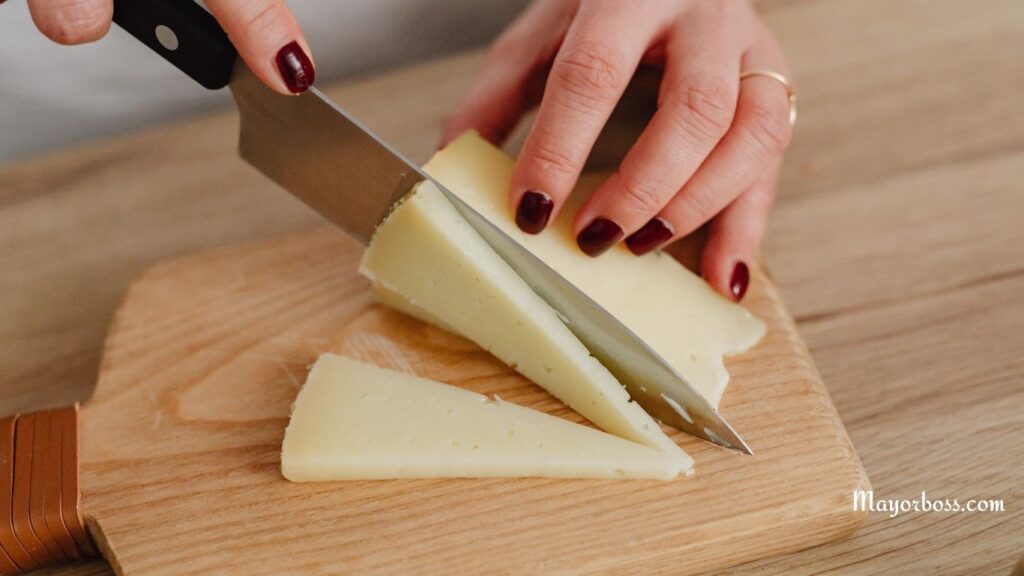
A wooden cutting board can feel like the center of a home kitchen. It looks clean. It feels sturdy. It is gentle on knives. That is why many people reach for it without a second thought.
Still, some foods do not belong there.
The main issue is simple. Raw juices can stay on the surface, settle into knife marks, and move onto other foods later. That risk grows when the board is older, rough, or not cleaned well after each use. Food safety guidance from the FDA and FoodSafety.gov recommends a separate board for raw meat, poultry, and seafood, along with thorough washing after each food item.1
At the same time, it helps to keep this balanced. Wood is not automatically unsafe. USDA says wood can be used for raw meat and poultry, and newer research suggests some wood boards may even hold lower bacterial counts than plastic in certain settings. Even so, USDA also notes that nonporous surfaces are easier to clean, and public health advice still favors separate boards for raw meat, poultry, and seafood. For most home kitchens, that is the safer habit.2
Raw chicken
Raw chicken is the first food to keep off a wooden board. Chicken juices spread fast, and chicken is one of the most common sources of food poisoning at home. If the board later touches salad, fruit, bread, or cooked food, those germs can move right along with it. A smooth board reserved for raw meat is easier to clean well after use.
Raw turkey
Turkey belongs in the same high-risk group as chicken. Many people handle turkey only a few times each year, often during busy holiday cooking, which can make kitchen mistakes more likely. A wooden board used for turkey can leave behind raw juices that are easy to miss, especially near grooves and edges. Keep the turkey on a separate board and keep that board away from foods ready to eat.
Raw beef
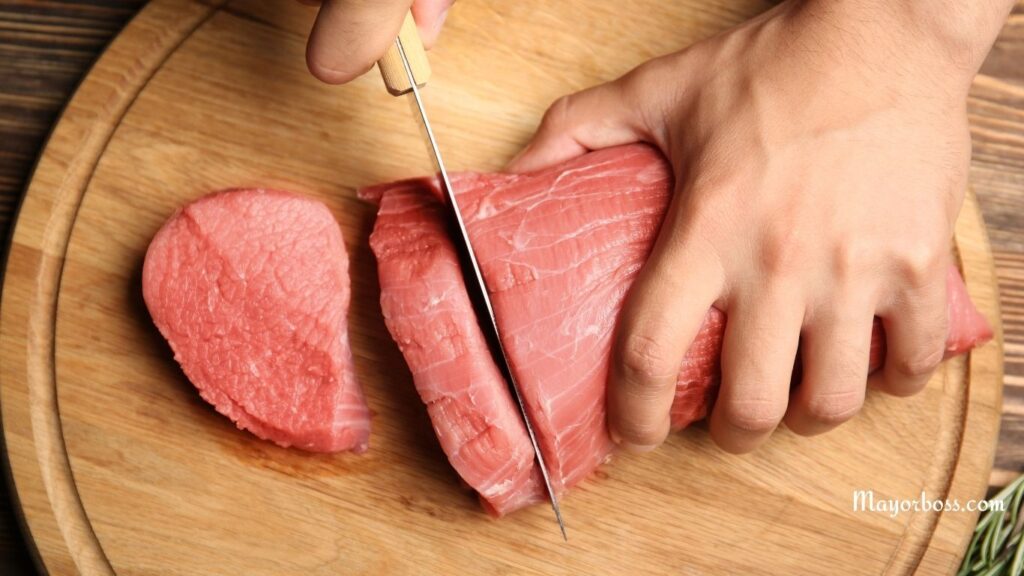
Raw beef can also spread harmful germs, especially on the outside surface. Ground beef deserves extra care because germs can mix throughout the meat during grinding. People often assume beef is less risky than poultry, but it still needs its own clean prep area. If you slice raw beef on wood, then use that same board for tomatoes or sandwich fixings, you create an easy path for germs to travel.
Raw pork
Raw pork should stay off your wooden board for the same reason. Its juices can contaminate foods that need no more cooking. This becomes even more concerning in a busy kitchen where the board gets reused too quickly. A board meant for raw meat keeps your routine simple. You do not have to guess what touched it last, and that alone can prevent a lot of kitchen mistakes.
Raw fish
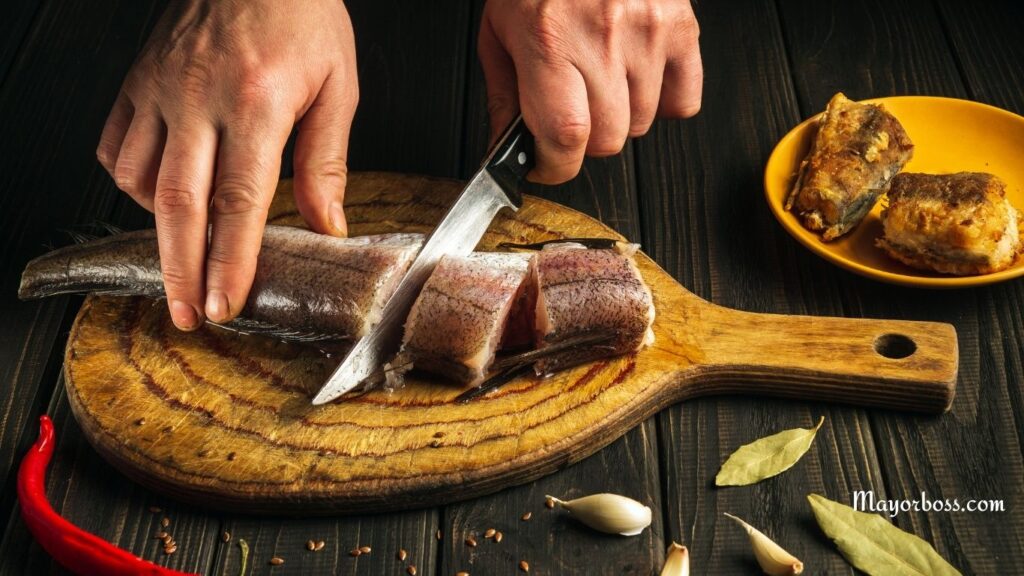
Raw fish also deserves its own board. Seafood can carry germs, and food safety advice places seafood in the same separate board category as raw meat and poultry. Fish often gets prepared right next to foods such as lemon wedges, herbs, cucumbers, or greens. That is where trouble starts. Once raw fish juice reaches those foods, there is no later cooking step to clean things up for you.
Shellfish
Shellfish, such as shrimp or scallops, should also stay off a wooden cutting board. Like other raw seafood, shellfish can spread germs onto hands, knives, counters, and other foods. Because shellfish is often prepped in small pieces, juices can spread farther than you think. A separate board makes cleanup easier and lowers the chance that raw seafood ends up where it does not belong.
What is your wooden board best for
So what should go on a wooden cutting board?
Use it for bread, whole fruit, herbs, cheese, and vegetables that will get washed, cooked, or eaten soon after clean prep. A well-kept wooden board can still be a great kitchen tool. The key is to reserve it for lower-risk foods and keep raw meat, poultry, and seafood on a different surface. That simple habit keeps your routine cleaner and safer.
How to keep your kitchen safer
If you own only one board, prepare fruits and vegetables first. Move them away. Then wash the board with hot, soapy water before raw meat or seafood touches it. The FDA also notes that a bleach solution can sanitize surfaces, and worn boards should be replaced because deep grooves and cracks are hard to clean. In other words, the board itself is only part of the story. Your cleaning routine is just as important.
The bottom line
A wooden cutting board is not the enemy. But it is not the right place for every food either.
If you want a simple rule that protects your meals and your family, keep raw chicken, raw turkey, raw beef, raw pork, raw fish, and shellfish off your wooden board. Save wood for lower-risk foods. Use a separate board for raw meat, poultry, and seafood. Then clean it well and replace it once it gets worn.
That is a small kitchen habit with real value.
FAQs
Can you cut vegetables on a wooden cutting board?
Yes. Wooden boards are commonly used for vegetables, fruit, bread, and other lower-risk foods. The safer approach is to keep a different board for raw meat, poultry, and seafood.
Is a wooden cutting board always unsafe?
No. USDA says wood can be used, and some newer research suggests certain wood boards may hold lower bacterial counts than plastic in some conditions. Still, public health guidance favors separate boards for raw meat, poultry, and seafood, since that routine is easier and safer for most homes.
What kind of board is better for raw meat?
Food safety guidance often points people toward a separate board that is easy to clean well. USDA notes nonporous surfaces are easier to clean than wood, which is one reason many home cooks use plastic or another smooth surface for raw meat.
How do you clean a board after raw meat or seafood?
Wash it with hot, soapy water after each use. Periodic sanitizing also helps, and the FDA notes that a bleach solution can be used on surfaces. Let the board dry fully before storing it.
When should you throw a cutting board away?
Replace it when it becomes deeply worn, cracked, or full of hard-to-clean grooves. Those damaged areas can trap food and germs, which makes safe cleaning harder.