
Spring allergies often cause sneezing, a runny or stuffy nose, itchy eyes, and nasal congestion when tree and grass pollen rise. The most helpful ways to protect yourself are to check pollen counts, keep windows closed, shower and change clothes after time outdoors, use saline rinses, and start the right allergy medicine early. Nasal corticosteroid sprays are often the most effective treatment for allergic rhinitis, while allergy shots or tablets can offer longer-term relief for some people.

Spring can feel like a fresh start. Trees bloom. Grass turns green. The air feels lighter. Then your nose blocks up, your eyes water, and the sneezing starts.
If that sounds familiar, you are not alone. Seasonal allergies, also called allergic rhinitis or hay fever, happen when your immune system reacts to pollen as if it were harmful. That reaction can lead to sneezing, a runny or stuffy nose, an itchy nose, an itchy throat, and watery eyes.
Why spring allergies feel so strong
In spring, tree pollen often rises first, followed later by grass pollen. Once pollen is in the air, it can reach your nose and eyes easily. That is why symptoms can flare after a walk, yard work, or even sitting near an open window.
Nasal congestion can be the most frustrating part. You may sleep poorly, wake with a dry mouth, or feel pressure in your face. Sneezing often comes in bursts, and the constant nose blowing can leave your skin sore. Even when the symptoms are not dangerous, they can wear you down.1
How to tell allergies from a cold

A cold and spring allergies can look alike at first. Both can cause a stuffy nose, sneezing, and a runny nose. Still, allergies often come with itching. That includes itchy eyes, itchy nose, and sometimes an itchy throat. Watery eyes are also more common with allergies.

Fever points more toward an infection than allergies. Facial pain, thick drainage, or symptoms that shift into fever and fatigue can suggest sinusitis or another illness instead of a simple pollen allergy.
A useful clue is timing. If your symptoms return around the same season each year, or get worse after time outdoors, pollen is a likely trigger.
How to protect yourself outdoors

The first goal is simple: reduce contact with pollen as much as you can.
Keep an eye on pollen counts and limit outdoor activity when counts are high. During spring and summer, tree and grass pollen levels are often highest in the evening, according to ACAAI guidance.
Keep house and car windows closed during allergy season. Use air conditioning when possible. This helps keep pollen out of the spaces where you rest and sleep.
After time outdoors, shower, wash your hair, and change your clothes. Pollen can cling to skin, hair, and fabric, then follow you onto your couch or into your bed. It also helps not to hang clothes or sheets outside to dry during high pollen periods.
When you have to be outside, sunglasses can help keep pollen out of your eyes. If you are mowing, gardening, or doing yard cleanup, ACAAI also advises a NIOSH-rated 95 filter mask.
How to keep symptoms calmer at home
Your bedroom deserves extra attention. Closed windows, clean bedding, and showering before bed can lower the amount of pollen you carry into the place where you sleep. That can mean fewer symptoms overnight and less morning congestion.
A saline nasal wash can also help. MedlinePlus notes that for mild allergic rhinitis, a nasal wash can remove mucus from the nose. It is important to use distilled or sterilized water for nasal rinses.
Which treatments help most
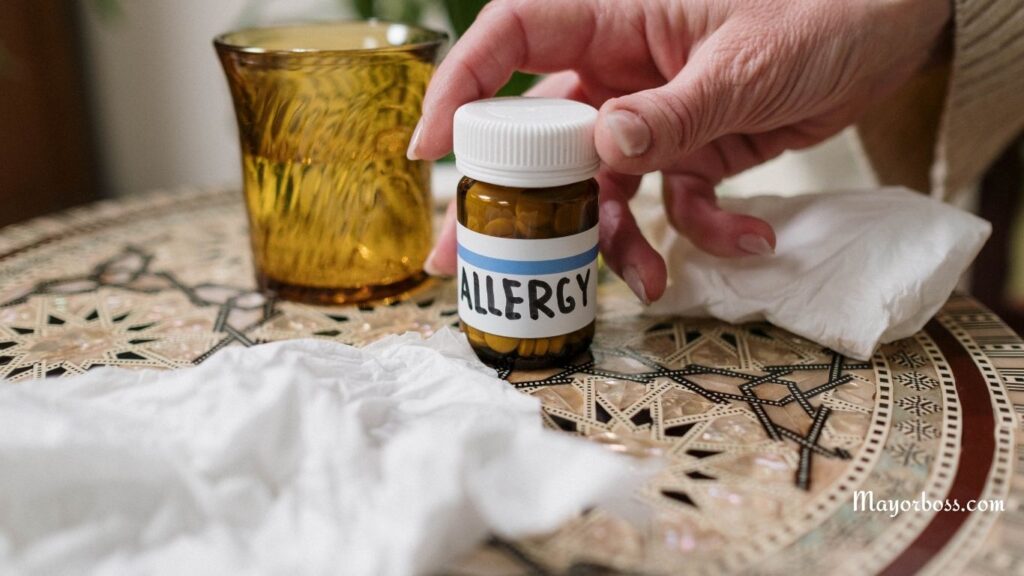
If avoidance is not enough, medication can help a lot.
MedlinePlus says nasal corticosteroid sprays are the most effective treatment for allergic rhinitis. These sprays help calm the swelling and irritation inside the nose. They work best with regular use, not only on the worst days. Fluticasone nasal spray is one common example used for sneezing, runny nose, stuffy nose, itchy nose, and itchy watery eyes linked to hay fever and other allergies.
Antihistamines are another common option. They help block the chemical that drives many allergy symptoms. They can be useful when sneezing, itching, and a runny nose are the main problems.
Some people reach for decongestant nasal sprays when they cannot breathe through the nose. These can give short relief, but they are not a long-term answer. FDA warns that some nasal decongestants should not be used for more than 3 days, since longer use can cause congestion to come back or get worse.
When longer-term treatment may help
If symptoms return every spring, keep disrupting sleep, or still break through despite good medicines, allergy testing may help identify the exact trigger. MedlinePlus notes that skin testing is the most common allergy test for allergic rhinitis.
For some people, immunotherapy can offer longer relief. This includes allergy shots and, for certain pollens, allergy tablets placed under the tongue. AAAAI says these treatments can reduce sensitivity to allergens and may provide lasting relief, often over a treatment course of 3 to 5 years.2
When to see a doctor
Spring allergies are common, but they should not be brushed off when symptoms are severe or confusing.
Seek medical care if you have wheezing, shortness of breath, severe swelling, or symptoms that feel more than a simple pollen reaction. Also, get checked if treatment stops helping, if the problem keeps coming back, or if you develop fever, marked facial pain, or thick drainage that suggests sinusitis.

The bottom line
Seasonal nasal congestion and sneezing can turn a beautiful season into a miserable one. Still, you are not powerless.
The best plan is usually a simple one. Cut down pollen exposure. Clean it off after time outdoors. Use saline when you need gentle relief. Start the right allergy medicine early, especially a nasal corticosteroid spray if congestion is a major problem. And if spring keeps hitting hard year after year, ask about allergy testing or immunotherapy.
FAQs
What causes spring allergies?
Spring allergies are usually linked to pollen from trees and later from grasses. Your immune system treats that pollen as a threat, which leads to sneezing, congestion, a runny nose, and itchy eyes.
What is the best medicine for seasonal nasal congestion?
For allergic rhinitis, nasal corticosteroid sprays are often the most effective treatment, especially when congestion is the main issue.
How can I lower pollen exposure at home?
Keep windows closed, use air conditioning, shower, and change clothes after coming in, and avoid drying clothes outside during high pollen periods.
Can saline rinses help with allergy congestion?
Yes. MedlinePlus says a nasal wash can help remove mucus in mild allergic rhinitis. Use distilled or sterilized water for nasal rinses.
When should I think about allergy shots or tablets?
Consider them if symptoms return often, stay bothersome despite medicine, or you want longer-term relief. Allergy shots and certain allergy tablets can lower sensitivity to the trigger over time.