
If you are worried about clogged arteries, you may wonder if one simple food can help. Some foods can help protect your arteries over time.
One of the best daily choices is oatmeal.
Oats are simple, affordable, and backed by research. They contain a type of fiber that helps lower “bad” cholesterol. That’s important because high cholesterol can slowly build up inside your arteries and raise your likelihood of a heart attack and stroke.1
So while oatmeal will not erase plaque overnight, eating it often can help your body move in the right direction.
Why Arteries Get Clogged
Your arteries are the blood vessels that carry blood from your heart to the rest of your body. They need to stay open and flexible.
Over time, fatty buildup can collect inside them. This buildup is often called plaque. When plaque grows, blood has less room to flow.
At first, you may not feel anything.
That is what makes clogged arteries so concerning. Many people do not notice a problem until blood flow becomes limited. Some may feel chest pressure, shortness of breath, leg pain while walking, or unusual fatigue.2
Others have no warning signs at all.
This is why daily food choices are important. What you eat can affect your cholesterol, blood pressure, blood sugar, and weight. All of these play a role in artery health.
Why Oatmeal Is Good for Your Arteries
Oatmeal is rich in soluble fiber. This type of fiber turns gel-like in your gut.
That gel helps trap some cholesterol before your body absorbs it. Then your body removes more of it through digestion.
The result can be a lower LDL cholesterol level. LDL is often called “bad” cholesterol because high levels can lead to plaque buildup in the arteries.
This does not happen in one day. It takes consistency.
Recent research indicates consuming about 3 g of oat beta-glucan daily (roughly 2 to 3 servings of oats) can lower your LDL levels by roughly 5% to 10%.
Make oatmeal a daily habit to help reduce pressure on your arteries. It works best when it replaces less healthy breakfast foods, such as pastries, processed meats, or sugary cereals.3
The Best Way to Eat Oatmeal for Heart Health
Choose plain oats when possible.
Steel-cut oats, rolled oats, or plain quick oats are all good choices. The key is to avoid packets loaded with sugar.
A heart-friendly bowl can be simple:
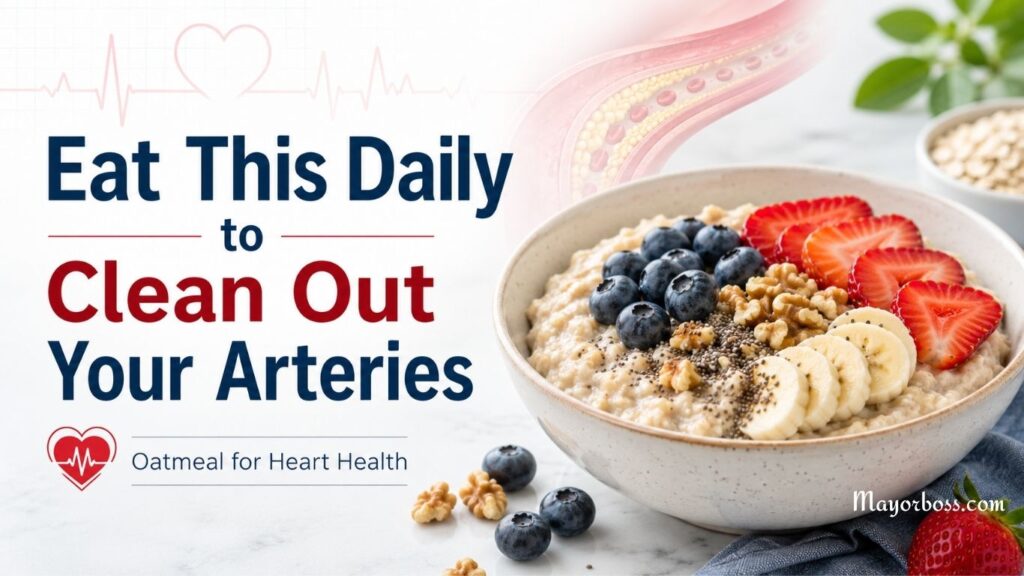
Cook oats with water or low-fat milk. Add berries, sliced apples, or a small banana. Sprinkle in ground flaxseed, chia seeds, or a small handful of walnuts.
This gives you fiber, healthy fats, and natural sweetness without needing much sugar.
If you like more flavor, use cinnamon. You can also add a spoon of plain Greek yogurt after cooking for extra protein.
What to Avoid Adding to Oatmeal
Oatmeal can become less healthy if you load it with the wrong toppings.
Try not to add too much brown sugar, syrup, butter, sweet cream, or candy-like toppings. These can raise calories and may work against your heart health goals.
Also, watch portion size.
A large bowl with heavy toppings can turn into a high-calorie meal. For many adults, about half a cup of dry oats is a good starting amount.
Other Foods That Help Protect Your Arteries
Oatmeal is a strong daily choice, but it works better as part of a full heart-healthy pattern.
Beans and lentils are also rich in fiber. They help you feel full and can support healthy cholesterol levels.
Nuts, such as almonds and walnuts, provide healthy fats. A small handful is enough for most people.
Fatty fish, such as salmon, sardines, trout, and mackerel, give your body omega-3 fats. These fats support heart health and may help lower triglycerides, which are another type of fat in the blood.
Fruits and vegetables also important. They provide fiber, potassium, and plant nutrients that support blood vessels.
Olive oil can be a better choice than butter because it contains unsaturated fat. This type of fat is better for cholesterol when used in place of saturated fat.
What Else Helps Keep Arteries Healthy?
Food is important, but it is not the only factor.
Regular movement helps your heart and blood vessels work better. Even walking can help when done often.
Not smoking is one of the most powerful ways to protect your arteries. Smoking damages blood vessels and speeds up plaque buildup.
Sleep also important. Poor sleep can affect blood pressure, appetite, and blood sugar.
If you have high blood pressure, diabetes, high cholesterol, or a family history of heart disease, do not rely on food alone. You may need blood tests, medical care, and sometimes medicine.
That is not a failure. It is prevention.
When to See a Doctor
See a doctor if you have chest pain, chest pressure, shortness of breath, pain spreading to the arm or jaw, sudden weakness, or fainting.
These symptoms need urgent attention.
You should also ask your doctor about checking your cholesterol, blood pressure, and blood sugar. These numbers can show early warning signs before symptoms appear.
The Bottom Line
If you want one food to eat daily for healthier arteries, choose oatmeal.
It will not “clean out” your arteries overnight. But it can help lower bad cholesterol, support digestion, and make your breakfast better for your heart.
Small daily choices add up.
A bowl of oatmeal today may seem simple, but over time, simple habits can help protect your heart.