7 Foods to Help You Ease Bloating
The best foods for bloating depend on what is causing it. If constipation is part of the problem, green kiwifruit, oats, and firm bananas may help. If your stomach feels heavy after meals, ginger and peppermint may offer relief. If you are sensitive to certain hard-to-digest carbs, gentler choices such as rice and some low-lactose or live-culture dairy foods may be easier to handle.

Bloating can make a normal day feel off. Your clothes may feel tight. Your stomach may feel full, puffy, or stretched. Sometimes the problem is extra gas. Sometimes it is constipation. Sometimes it shows up after a meal that your body simply did not handle well. The hard part is that bloating is one symptom with many possible causes, so one “best” food does not fit everyone.
That said, some foods stand out because they are gentle on the stomach, less likely to create gas, or helpful when constipation is part of the picture. Research also shows that certain food patterns can help some people, especially those with irritable bowel syndrome, lactose intolerance, or food triggers linked to poorly digested carbs.
Why the right food depends on the cause
The National Institute of Diabetes and Digestive and Kidney Diseases explains that gas often builds when certain carbs are not fully digested in the stomach and small intestine. Those carbs move into the large intestine, where bacteria break them down and create gas. High-fat foods can also increase bloating in some people. That is why one person may feel fine after a food that leaves someone else miserable.
This is also why “healthy” foods can still cause trouble. A large jump in fiber can trigger gas and bloating, even though fiber helps many people in the long run. If your bloating comes with constipation, you may do better with foods that support regular bowel movements. If it comes after rich meals or a heavy, slow feeling in your stomach, another group of foods may help more.
Green kiwifruit
Green kiwifruit is one of the best food choices when bloating comes with constipation. In a randomized controlled trial, eating two green kiwis a day improved bowel movement frequency and overall stomach comfort in constipated adults. That is useful because trapped stool often goes hand in hand with bloating and pressure.
Kiwifruit also has another advantage. It is listed as a lower-FODMAP fruit choice on the Monash University guide, which means it is less likely than some other fruits to create extra gas in people who are sensitive to these hard-to-digest carbs. If your stomach tends to blow up after apples, pears, or dried fruit, kiwi may be a much better fit.
Ginger

Ginger is a smart choice when bloating comes with a heavy, slow, overfull feeling after meals. A controlled trial found that ginger sped up stomach emptying and increased stomach contractions in healthy adults. In plain terms, it helped food move along faster.
That does not mean ginger cures every kind of bloating. Still, it can be a helpful food or tea when your stomach feels like it is just sitting there after you eat. Fresh ginger in hot water, ginger added to meals, or a small amount in soup can be a simple place to start.
Peppermint
Peppermint has a strong reputation for digestive comfort, and the research is strongest for peppermint oil. A meta-analysis of randomized trials found that peppermint oil worked better than a placebo for overall irritable bowel syndrome symptoms and abdominal pain. That does not prove that peppermint tea works the same way, but it does support the idea that peppermint can calm some types of digestive discomfort.
Peppermint tea is easy to try and may feel soothing, but the human research on peppermint tea itself is limited. Also, peppermint is not perfect for everyone. It can worsen heartburn in some people, so it is best to skip it if mint tends to bring burning up into your chest or throat.
Yogurt
Some people feel better with yogurt that contains live cultures, especially when bloating is linked to slow movement through the gut. In one clinical trial, a probiotic fermented milk product improved abdominal distension and gut transit in adults with constipation-predominant irritable bowel syndrome. In another study, a probiotic food also improved bloating in people with constipation-predominant symptoms.
NIDDK lists dairy among foods that can increase gas in some people, and MedlinePlus notes that lactose intolerance can cause bloating, gas, nausea, and diarrhea after dairy. The good news is that many people who do not tolerate milk well can handle yogurt better, since fermentation breaks down much of the lactose. If dairy tends to upset your stomach, start small or choose a lactose-free option.
Oats
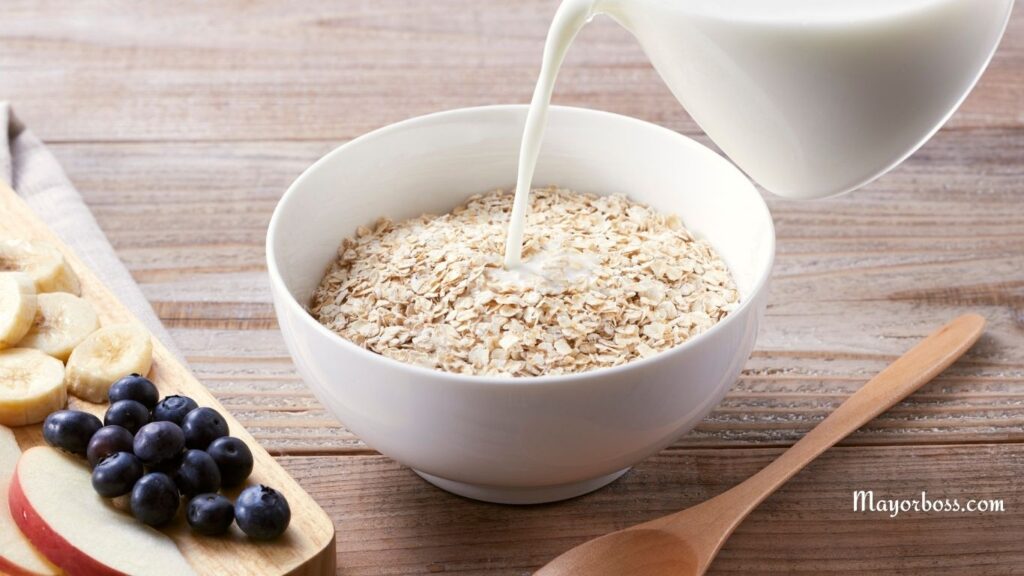
Oats are a useful food when you want something filling but gentle. Monash lists oats among lower-FODMAP grain choices, which can make them easier to tolerate than wheat-heavy breakfast foods for some people. They also offer soluble fiber, which can support bowel regularity when constipation is causing your bloating.
The key is pace. NIDDK warns that adding too much fiber at once can cause gas and bloating. So if your current diet is low in fiber, start with a modest serving of oatmeal instead of a huge bowl loaded with extra bran, seeds, and sweeteners.
Firm bananas
Bananas are often seen as a safe food for an upset stomach, but ripeness changes the picture. Monash reports that firm bananas are lower in FODMAPs, while ripe bananas are higher. That means a slightly green banana may sit better than a very ripe one if you are prone to gas and bloating.
This is a helpful reminder that bloating is often about details. Portion size matters. Ripeness matters. Timing matters. A food that seems harmless can still become a trigger when the amount is large or the form is different.
White rice
Rice is one of the simplest foods to fall back on when your stomach feels touchy. Monash lists rice among lower-FODMAP grain choices, which means it is less likely than many other starches to ferment and create extra gas in sensitive people. It is also plain, easy to pair with lean protein, and useful on days when your stomach needs a break from richer meals.
Rice will not treat the root cause of bloating on its own. What it can do is give you a calmer base meal while you sort out what is setting you off. That can be valuable, especially if onion, garlic, beans, wheat, sweeteners, or rich foods tend to trigger symptoms.
How to use these foods without making bloating worse
Food choice is only part of the fix. NIDDK also recommends eating slowly, sitting down to eat, avoiding talking while eating, and choosing smaller, more frequent meals instead of large ones. These habits cut down on swallowed air and can lower the pressure that builds after a rushed meal.
It also helps to keep a food and symptom diary. That can show you whether your bloating follows dairy, sweeteners ending in “ol,” certain fruits, beans, wheat, or high-fat meals. If symptoms are frequent, a doctor or dietitian may suggest a short trial of a low-FODMAP eating plan, especially if you have irritable bowel syndrome.
When bloating should not be ignored

Occasional bloating is common. Persistent bloating is different. It deserves attention if it is getting worse, keeps coming back, or shows up with warning signs such as bad pain, fever, blood in the stool, vomiting, or weight loss you cannot explain. Those symptoms can point to something more serious than simple gas.
The bottom line
When you are bloated, the goal is not to find one magic food. The goal is to find the foods your body handles better. Green kiwifruit, ginger, peppermint, yogurt, oats, firm bananas, and rice all have a reasonable place on that list. Some help because they are gentle. Some help because they support bowel regularity. Some may calm digestive discomfort.
Start small. Keep it simple. Watch your body’s response. That is often the fastest path to less pressure, less puffiness, and a stomach that feels more like your own again.
FAQs
What foods help with bloating fast?
Foods that may help quickly include ginger, peppermint tea, plain rice, and a small serving of firm banana if you tolerate it well. If constipation is part of the problem, green kiwifruit may help more, though that usually works over days rather than minutes.
Is yogurt good for bloating?
It can be for some people, especially yogurt with live cultures. But if you are lactose intolerant, dairy may worsen bloating. Many people tolerate yogurt better than milk because fermentation breaks down much of the lactose.
Are bananas good for bloating?
They can be, but ripeness matters. Monash reports that firm bananas are lower in the types of carbs that often trigger gas, while ripe bananas are higher.
Why do healthy foods sometimes make bloating worse?
Some healthy foods are high in fiber or hard-to-digest carbs. If your body does not digest them well, bacteria in the large intestine break them down and create gas. Adding a lot of fiber at once can also lead to bloating.
When should I see a doctor for bloating?
See a doctor if bloating is persistent, keeps getting worse, or comes with severe pain, fever, vomiting, blood in the stool, or unexplained weight loss.